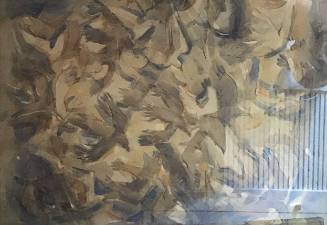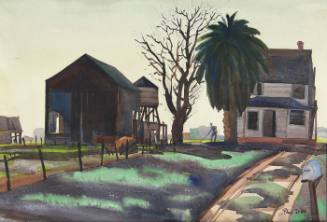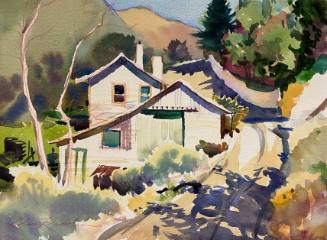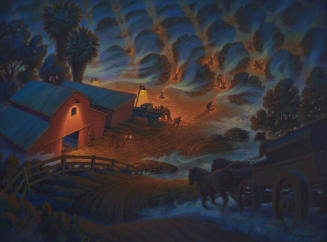


Smudging (Dike Ranch, Redlands, CA)
Artist
Phil Dike
(1906 - 1990)
Date1938
MediumWatercolor on paper, varnished by artist
Dimensions14 x 20 in. (35.6 x 50.8 cm)
Framed (Frame is gold, wired, glazed): 22 1/2 x 28 1/4 x 1 1/2 in. (57.2 x 71.8 x 3.8 cm)
Framed (Frame is gold, wired, glazed): 22 1/2 x 28 1/4 x 1 1/2 in. (57.2 x 71.8 x 3.8 cm)
ClassificationsPainting
Credit LineThe Sally and David Martin Collection
Object number2026.025
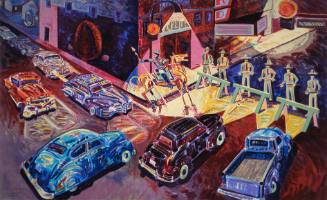
DescriptionArtist Phil Dike was raised in Redlands in a quintessential Queen Anne Style Victorian mansion. Orange groves surrounded the property. His father, Andrew Nobel Dike, owned other ranch properties as well and Phil, when an adolescent and teenager, was actively involved in labor-intensive projects related to maintaining the ranch lands and groves. One of those jobs included participating in the smudging process that took place to save the orange crops from freezing. The method of heating the groves to keep the frost away was to fill smudge pots full of oil and light them on fire. Streams of black oily smoke arose along with the heat. Together they often served to raise the temperature around the trees and save the orange crop from freezing and being a total loss.
Since the temperature drop usually became most critical at night and in early morning hours when it was dark, that is when smudging took place. It was an amazing sight to see as groves and dark night sky were lit up by many hundreds or thousands of flaming pots of oil. In addition, there were large numbers of people running around filling pots with more oil and lighting them. The atmosphere, I can clearly recall, was thick with anxiety, excitement and wonder. Those were very surreal experiences.
This painting speaks loudly to anyone who has experienced one or more of those smudging events. On more than one occasion I was awakened from a deep sleep by the screaming siren that signaled the ranchers needed help to save the oranges. I responded and experienced what that was like on at least six occasions, and can say Phil did a remarkable job of capturing the look and feel of those experiences.
– Gordon McClelland, curator
Collections